January 16th, 2025
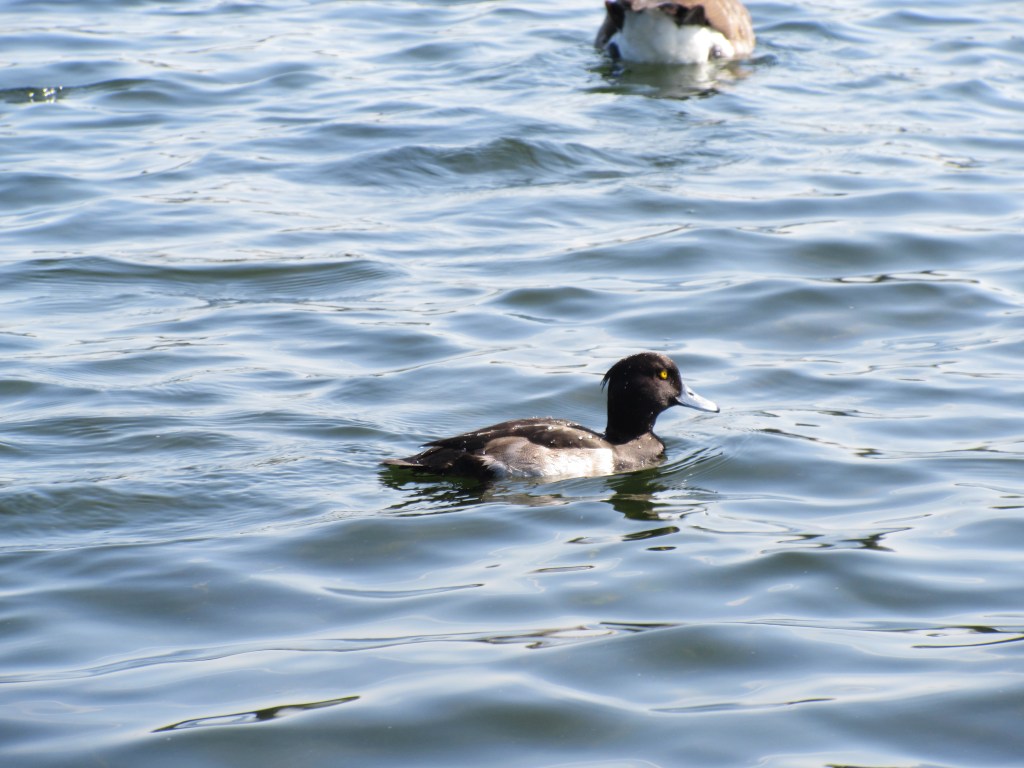
First and foremost, I would like to extend a warm welcome to anyone taking the time to read my first ever blog post. I hope to become more refined in my approach as time goes on, and perhaps if your reading this in the (not-so) distant future, I’ll have become every bit a wordsmith on the topic of birds as Shakespeare is with the Tragedy. Decidedly less tragic, though. Anyway, short and sweet on the topic of Aythya duck identification.
The first couple reports of a Tufted Duck spotted at Colonel Samuel Smith Park in Toronto trickled in on January 4th, followed by a flurry of reports in the days that followed. Initially spotted by Iain Fleming, well over 100 people were able to observe this initial individual, with new sightings to the East at Lake Crescent Park on January 12th, and even a report further East still at the Toronto Islands on the 15th. With any luck it will continue to Oshawa, and I’ll actually be able to see it for myself. I’m no stranger to Tufted Ducks though, having seen many across the pond in their native European range. Over there, they are very common in city ponds and rivers, and not easily mistaken for anything else in their range.
That brings us to the problem of sorting them out from our native Aythya ducks, the Scaups. Yes, they are in the same genus, and yes they can hybridize (but that is an utterly confusing and often speculative topic that I wouldn’t touch with a 10 foot pole). Tufted Ducks who find themselves on the North American continent love to associate with other Scaups, they are almost always found in large rafts of Greater and Lesser Scaups. This can make them challenging to pick out, but also provides a useful reference to compare differences between the species.
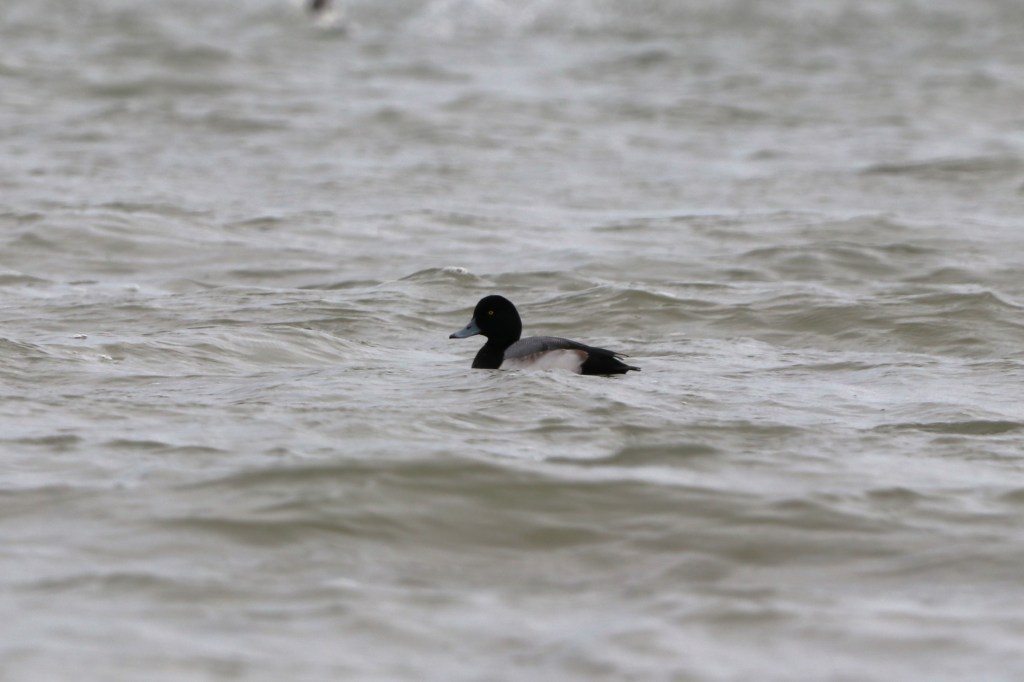
Male Tufted Ducks are the easiest to identify. The key difference to look out for is the ponytail-like tuft of feathers that protrudes from the back of the head, but this can be difficult to judge at a distance amongst a large raft of Scaups, or when the head is tucked in while sleeping. The second key field mark is the colour of the back; Tufted ducks have a dark black back while Scaups sport more of a gradient, compare the below photo of a Greater Scaup with the photo of the Tufted Duck from earlier:
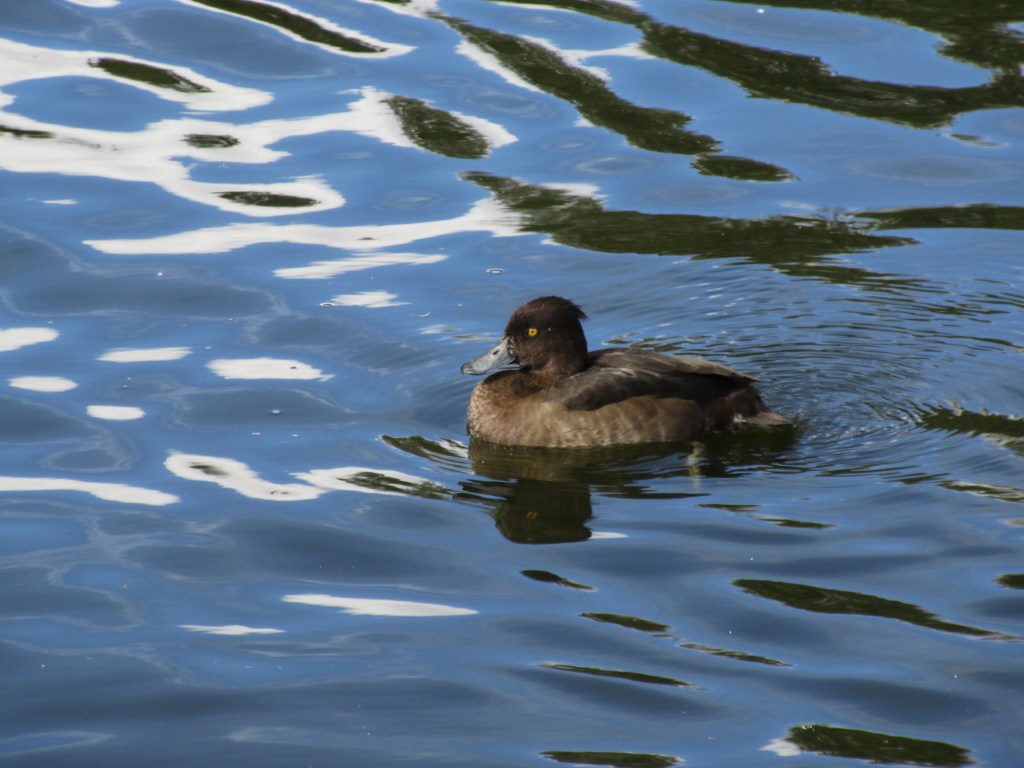
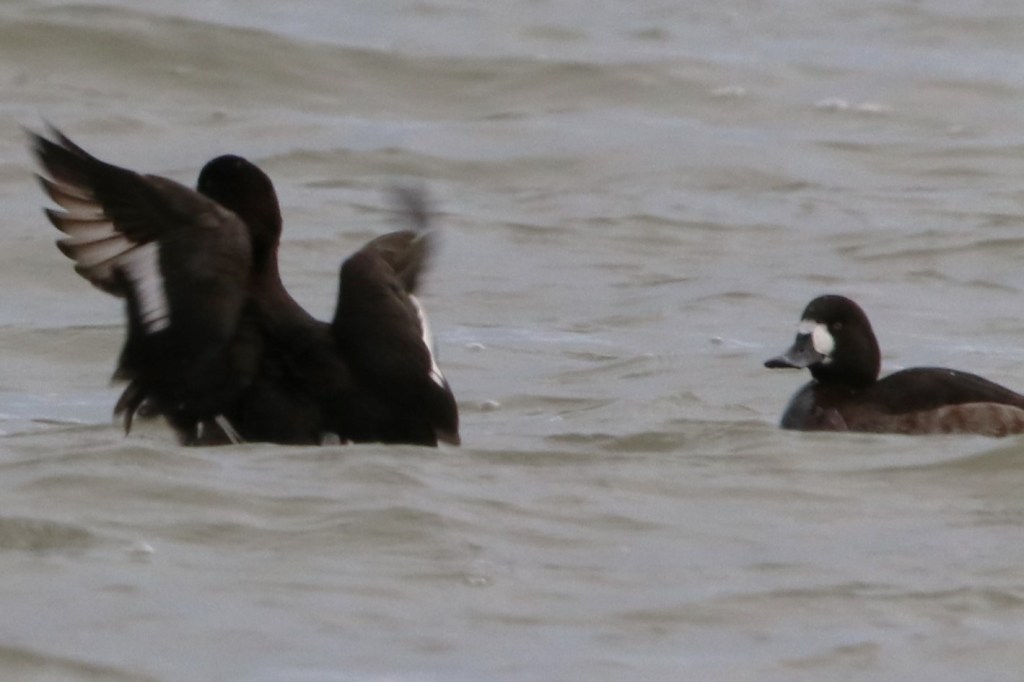
Females are a bit more difficult, but keep in mind that Tufted Ducks will be a darker shade of brown overall. Female Scaups also tend to have much more of a white patch around the base of the bill, but this can be difficult to impossible to judge if they are sleeping.
All said and done, it may be fruitful to keep an eye out for Tufted Ducks on Lake Ontario this Winter. There could be many more than we think hidden amongst the rafts of Scaup. I know that when I am birding in the Winter, I can barely keep my binoculars steady in the wind and cold long enough to afford distant waterfowl more than a cursory glance. That being said, I’ll leave you with a humorous comment from an eBirder following up on a Eurasian Wigeon sighting a while back:
“Great find! … Who’s even checking [American] Wigeon rafts for these?”
Sometimes you have to do what no one else is doing to succeed.
Until next time,
-David
 On The Wing
Leave a comment